
Plain Talk Pt. 2: Building the Missing Middle & Navigating Washington's New Permitting Rules

The Next Piece of the Puzzle
In our last post, we broke down what “affordable” really means and how most Washington families aren’t asking for subsidies, just options. This time, we’re looking at what it takes to actually create those options.
What comes to mind when you hear the word “housing”?
Most people picture single-family homes or big apartment buildings, because that is what we see the most. But there is a whole world of housing types in between — smaller, simpler homes that fit on regular neighborhood lots and don’t look or feel like large complexes.
We are talking about duplexes, triplexes, fourplexes, townhomes, and courtyard cottages. These are the kinds of homes that fit naturally into existing neighborhoods (what most people call infill) and offer more attainable price points for working families, first-time buyers, and older adults who want to stay in their communities.
Planners call this range of housing the “missing middle” and there’s a reason it has that name: it has quietly disappeared from most places, even though it is often what people say they want more of.
The System Was Not Built For Small Projects
The problem is that these homes have become the hardest to build. The systems that approve housing were never designed for small projects, and the process does not scale down well.
A builder putting up a fourplex goes through the same engineering review, impact fees, and comment cycles as a developer proposing a 200-unit building, but without the staff or financing cushion to absorb delay. Most cities also have separate departments that review utilities, stormwater, and traffic, and each one works on its own schedule. A single round of conflicting comments can add months.
Small developers also face higher costs per unit because they cannot spread expenses across hundreds of homes. Every additional review, resubmittal, or required consultant eats directly into the project’s bottom line. Add in rising interest rates and construction costs, and most small projects stop penciling before they ever break ground.
The result is that the kind of housing people say they want — smaller, more neighborhood-scale, and locally built — often cannot survive the systems meant to approve it. That is why process reform matters just as much as zoning reform or funding. Until the systems themselves work for small projects, the missing middle will remain missing.
New Rules For How Cities Permit Housing
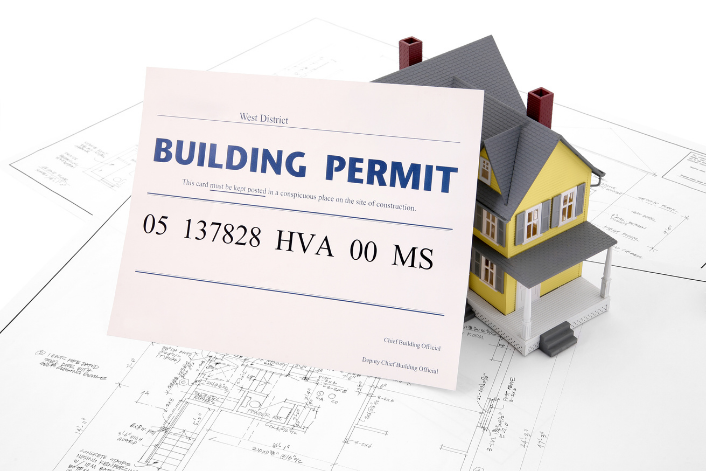
Last year, the Washington State Legislature passed Second Substitute Senate Bill 5290, creating an accountability framework for local permitting. If you have not yet read about this bill, or just want a quick refresher, this Olink News article is a great place to start. It walks through what the law does and why it matters. Our focus here is what comes next: how small developers, architects, and housing advocates can support their cities as these new rules roll out.
Beginning in 2025, cities need to process housing permits within defined timelines: 65 days for projects without public notice, 100 days for projects with public notice, and 170 days for those requiring a public hearing.
SB 5290 is a step in the right direction. It puts timelines and accountability in place, and it gives cities access to new tools like digital permitting grants and technical help from the Department of Commerce. The law sets the guardrails, but real progress depends on how local teams and the development community work together inside those lines.
Why This Matters Right Now
It is not a secret that Washington is not building fast enough. The region needs to roughly double annual housing production just to keep pace with demand by 2044, about 45,000 more homes every year than we are building today.
Housing Cost Challenges:
Current Construction Costs: A new housing unit in the Seattle metro area costs roughly $525,000 to $600,000 to build.
Affordability Target: The cost target for housing to be affordable for working families is significantly lower, falling closer to $300,000 to $350,000.
Impact of Permitting Delays: According to the Cascadia Housing Roadmap (published by Boston Consulting Group in 2024), permitting delays alone can add about $50,000 per unit in holding and financing costs.
Small Builder Example: For a small fourplex builder, those permitting delays translate to $200,000 gone before construction even begins.
SB 5290 will not solve every barrier, but it gives everyone a clearer map. Cities have new expectations, new reporting systems, and new opportunities to modernize, and builders now have a framework to hold the conversation. That is what makes this moment so important.
A Culture Shift in Progress
This is a big adjustment for local governments. Departments are understaffed, juggling new data systems, and trying to untangle years of process built for a different era of development.
Planners and reviewers want the system to work better just as much as builders do. This is where developers can make a real difference: not by pushing harder, but by partnering smarter.These are practical, solution-oriented ways to start those conversations.
Meeting with City Staff: Key Points to Discuss
1. Submitting a New Project Under the 2025 Rules
Try saying something like:
“We know the new timelines are a big change. Is there anything we can do on our end to make our submittal easier to track or review?”
Why it helps:
This acknowledges the staff's workload and invites a collaborative discussion about improving processes.
2. Understanding How the City is Adapting
Try saying something like:
“Can you walk me through how your team is setting up for the new permitting deadlines? We want to make sure our plans fit cleanly into your process.”
Why it helps:
This turns the compliance pressure into shared planning, demonstrating a willingness to align with the city's evolving procedures.
3. Facing Long Review Times
Try saying something like:
“Would it help if small infill builders joined early pre-submittal meetings with utilities and planning at the same time?”
Why it helps:
This shows initiative and encourages better coordination across departments, helping to reduce unnecessary delays or miscommunications.
4. Shaping Better Systems
Try saying something like:
“If the city pilots a fast-track option for small infill, we would be open to testing it with one of our sites.”
Why it helps:
This positions your company as a partner in innovation, not just a critic, and opens the door for improved processes.
These questions may seem small, but they open doors. They show that developers want to help cities meet the same state goals and that the housing industry is ready to be a partner in making reform work.
Process Reform is Affordability Reform
For large developers, a six-month delay is frustrating. For small infill builders, it is fatal.
Missing middle projects live in that fragile space: too small for subsidies and too big for one-off financing. Predictable timelines and consistent communication make all the difference.
Studies across the region show that simple fixes like faster permitting, pre-approved plans, fewer parking requirements, and digital plan review can cut project costs by roughly a third. That is not abstract policy; it is what turns a good idea into something that actually pencils.
When we make the process work, housing works. Every day shaved off review time is a day closer to breaking ground, and every project that pencils is one more family with a place to live.
Process reform may sound technical, but it is one of the most powerful affordability tools we have. It is where policy meets practicality — where timelines and teamwork turn into homes people can actually afford.
Where 1DROP Fits In
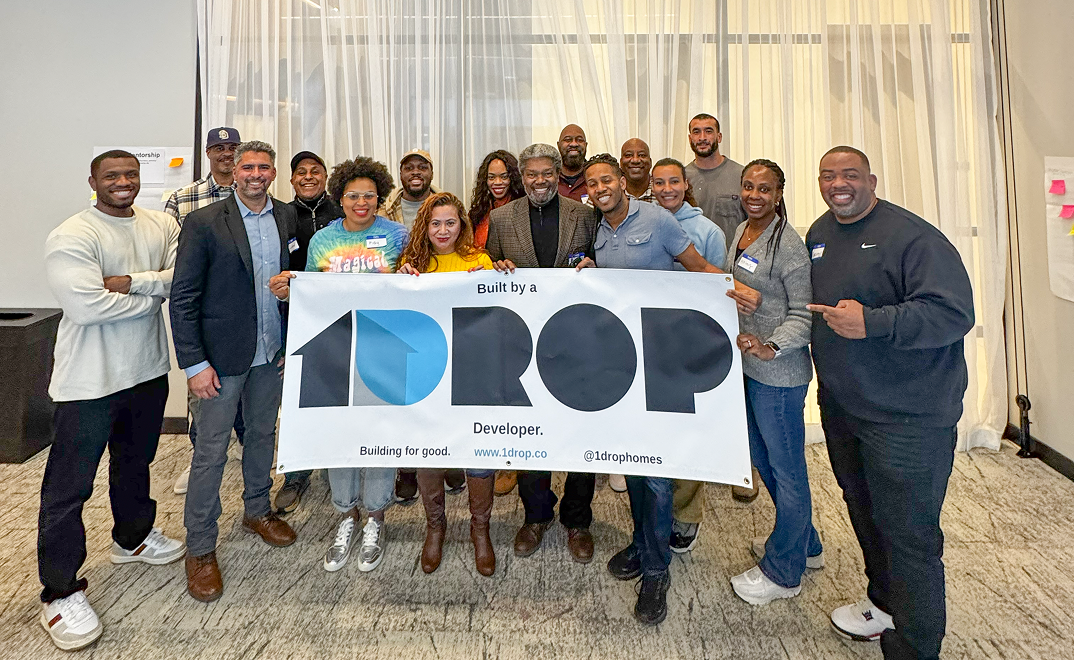
Predictability builds trust. Trust builds housing. Washington’s new permitting law gives us a shared framework, the same timelines, the same data, and the same urgency. If builders, planners, and policymakers use it as common ground instead of another battleground, we might finally see the kind of homes we have been missing.
1DROP’s work is all about that common ground. Our team helps developers and cities understand each other’s realities– the technical, procedural, and human sides of housing. We help cities modernize systems, and we help small builders navigate them. If you are ready to build the missing middle in your community, we can help you start the conversation.
Together, we're building homes for good.
This blog was written by Krosbie Carter, 1DROP's Director of Partnership, Development & Policy.
About 1DROP
Updated 1/30/2026
1DROP is a collective of underrepresented real estate developers addressing the Puget Sound housing crisis. We are committed to empowering underrepresented developers to build housing for all wages, all stages, and all ages while growing access to generational wealth.
1DROP achieves its mission by internally providing:
Apprenticeships for aspiring underrepresented developers.
Co-development frameworks for emerging underrepresented developers to navigate partnership models.
Mentorship, networking, resources and supports for all underrepresented developers.
and externally:
Advocating for funding for underrepresented developers and their projects.
Educating on and advancing policy solutions that enable more housing.
For those inspired to learn more or get involved in supporting equitable housing, visit 1DROP's website to explore our initiatives and join us in making an impact.
Have questions or suggestions for this post?
We're here to engage! For edits, feedback, or inquiries about this blog post, please reach out to press@1drop.co.